mushram.
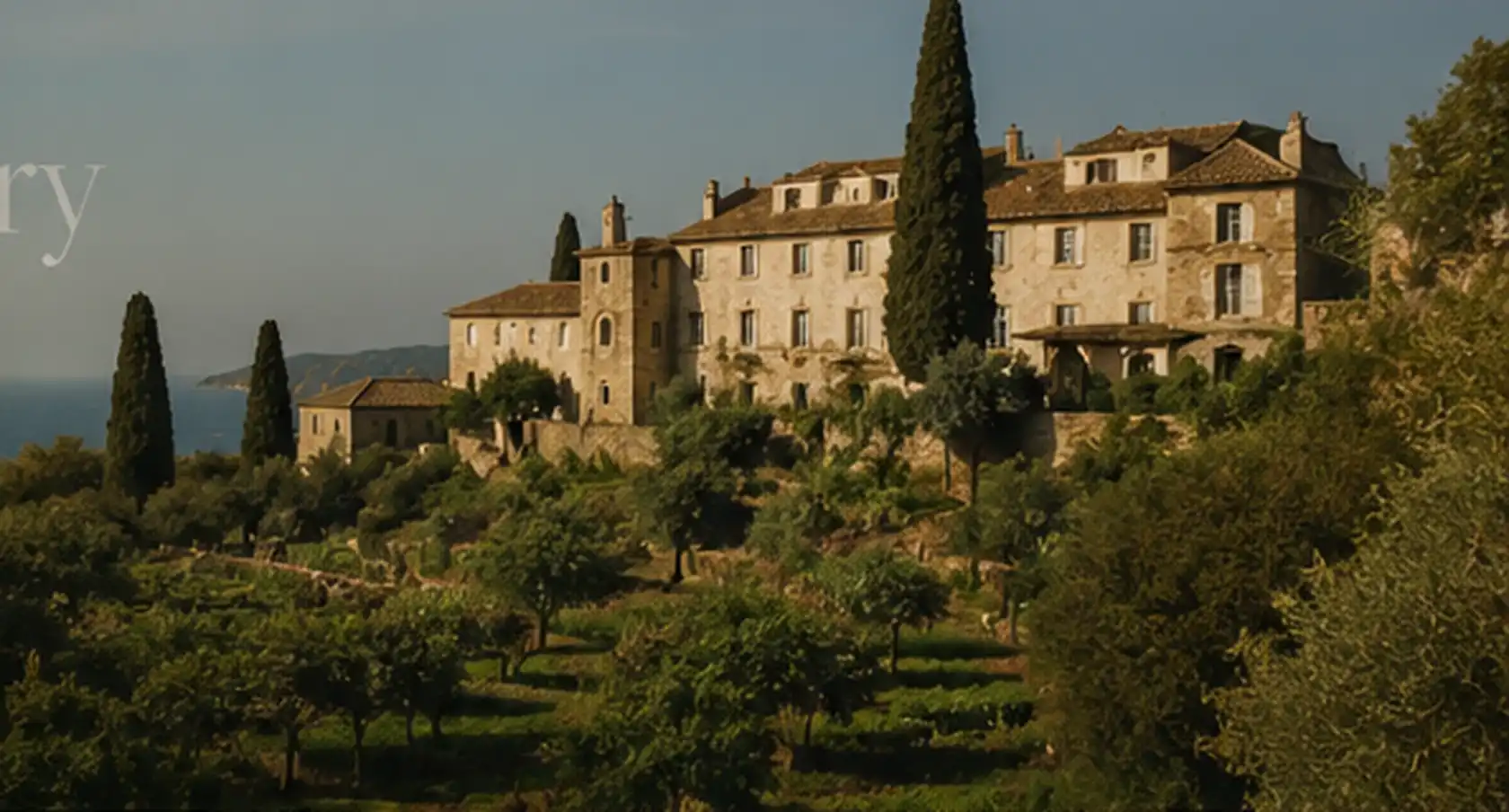
An old house on a rise above the sea. Regenerative land. Rooms for practice and rest. Fungi grown for food, research and curiosity. Animals, salt air, good meals — and enough time for a place to become more than an experience.
The name is the programme.
Mushram begins with a simple collision: mushroom and ashram. Not an Indian ashram transplanted to Europe, and not a mushroom retreat wrapped in borrowed spirituality. The part of the ashram idea that matters here is older and simpler: practice belongs to ordinary life.
You wake, breathe, move, cook, tend the land, eat, learn, rest, walk, talk, sit quietly, sleep — and do it again. Yoga and pranayama are not activities added to a holiday. They become part of the rhythm of a place. Mushrooms belong for the same reason: they connect soil, food, decay, regeneration, cultivation, alternative protein, research and, further out, the psychedelic horizon.
The outward journey is literal: the road narrows, the ground rises, the sea appears. The inward one is less schedulable. It needs fewer promises and more time.
We are not trying to manufacture another world for a weekend. We are trying to make enough room for another way of living to become briefly believable.
Even if that hope is a little naive.Old walls.
Living land.
The search is for a house with memory rather than spectacle: a bastide, quinta, manor or former monastic property on a rise near the sea — generous, imperfect, secluded, and capable of disappearing into green.
The garden is not landscaping. It has work to do. Water is slowed, stored and returned to soil. Terraces hold mixed orchards, vegetables, herbs, perennial crops and fungi. Compost and spent mushroom substrate return fertility. Wild edges remain habitat. Conservation is not a programme next to permaculture; it is a constraint inside the design.
Food, shade, water, habitat, beauty — on the same piece of land.


Depth needs
capacity.
Intensity is easy to mistake for depth. A strong breath practice, a difficult posture, a powerful emotional opening or a psychedelic experience can produce a great deal, quickly. What the body can actually stay present with often develops more slowly.
Capacity is not an esoteric idea here. It is the practical ability to remain with sensation, breath, emotion, uncertainty and contact without immediately having to force, numb, perform or escape. Yoga and pranayama matter partly because they give that capacity somewhere ordinary to be practised — repeatedly, without spectacle.
And the more intense the method, the more the surrounding conditions matter: preparation, pacing, trust, sleep, food, relationship, integration and time. Mushram is interested in the room around the fire, not only the fire.

No push event. No ego event. No competition over who went deepest. Not every day needs a breakthrough. Some should end with dirty hands, a swim, a long meal and an early night.


Simple is not the same as joyless.
Ashram life can mean discipline without turning life grey. Bread, olive oil, vegetables from the garden, mushrooms from the fruiting room, fruit from the trees, coffee in the morning, local wine with dinner. Long lunches when there is nowhere useful to be.
A swim. A book. A Berger Picard asleep in the shade. People cooking together. Someone practising. Someone doing absolutely nothing. Laissez-faire and practice do not have to be enemies.

Time is part
of the practice.
A striking experience is still only an experience. What happens before it, around it and after it changes what can be made of it.
Most retreats compress everything: arrival, intensity, insight, departure. Mushram is built around a different assumption — that some things need repeated mornings, ordinary meals, sleep, weather, boredom, work with the hands, laughter and unstructured space before they become legible.
Fire matters. So does the room around it. Enough fire for something to become vivid; enough space for it not to become another performance, identity or story you have to keep feeding.
Psilocybin belongs to Mushram’s research and cultural horizon, not to its sales pitch. If psychedelic work ever becomes part of the place, it would only be where lawful and responsibly held, with preparation, screening, pacing and integration treated as part of the work. No compound, practice or place comes with a promise of healing.
This is not a mailing list.
It is a signal fire.
If the idea connects with something you are already building, funding, researching, cultivating or dreaming about, tell us. Mushram is looking for the people who belong in the first circle.